Too Many Worlds, Too Few Missions

What if I told you that the past 65 years have been a continuous replay of 1492? Through the robotic exploration of our Solar System, we've turned what were specks of light in the night sky into tangible new worlds: Mars, Ceres, Pluto, etc.
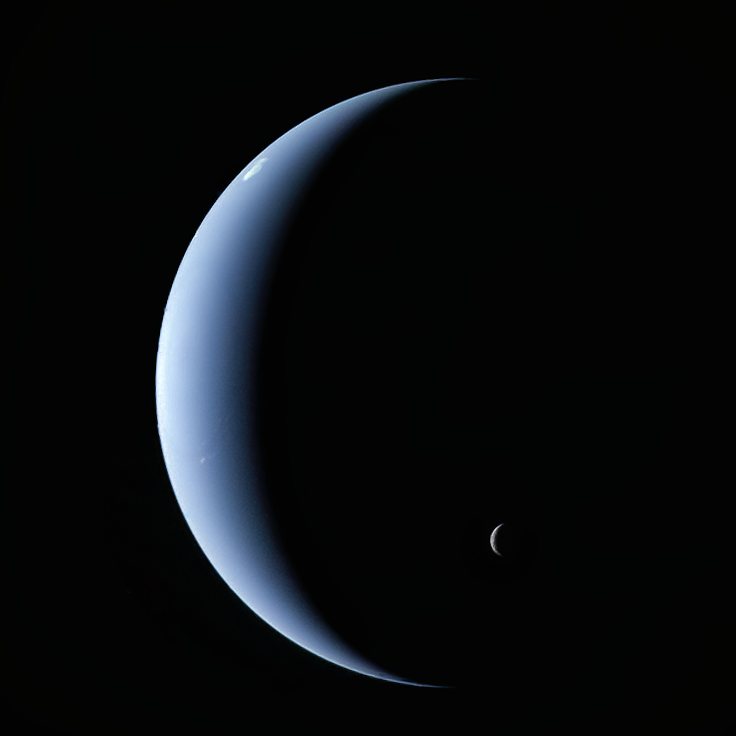
As such, our Solar System teems with targets that beg investigation. The Moon's South Pole holds reserves of permanent water ice, while Venus, shrouded in its runaway greenhouse atmosphere, could reveal further insights about the processes unfolding on our own planet. Mars, the eternal favourite, continues to provide more and more hints of ancient microbial life. Ceres may hold secrets about the Solar System’s birth, while ocean worlds such as Europa, Enceladus, Callisto, Ganymede and Titan abound with liquid water. Uranus’ moons, visited only once by Voyager 2, are enigmatic and remain virtually unknown, similar to Neptune's moon, Triton. Pluto and its moons demand further exploration, while many comets, asteroids, trojans, more Kuiper Belt Objects, and centaurs await visits. Yet, our approach to planetary exploration remains fragmented, defined by national programs, competing priorities, the current political climate, and limited budgets.
The scientific questions we face about extraterrestrial life and planetary evolution are common to us all. Shouldn’t our efforts to answer these questions be common as well? It may be time to consider an idea that feels both radical and pragmatic: the creation of a unified international institution dedicated solely to the exploration of the Solar System, a World Planetary Agency. In these times of divergences, this might seem counterintuitive, but I believe this idea makes a lot of sense.
For a start, it would allow the pooling of our resources. The cost of space exploration remains extraordinarily high. Designing, building, and launching a planetary mission routinely costs billions of dollars and demands decades of planning. Every nation that ventures into deep space carries the same burden of testing, launch systems, mission control, and data management. Yet we duplicate this infrastructure across agencies: NASA, ESA, JAXA, ISRO, CNSA, and others. We could pool resources to leverage economies of scale. The model exists already: the International Space Station, for all its political complexity, has proven that multinational cooperation can yield scientific returns when budgets and expertise are combined. We could set up a similar multinational program for the exploration of Mars, for example. Such an approach has, in fact, been considered for the Mars Sample Return mission, with NASA and ESA working together to return the valuable rock samples taken by the Perseverance rover.
Furthermore, space agencies each possess unique strengths. NASA has unmatched experience with deep-space navigation and program execution; ESA leads in collaborative science; JAXA and ISRO excel at cost-effective mission design. Yet technological breakthroughs are often siloed, and collaboration happens only through limited bilateral agreements. A World Planetary Agency would institutionalise technical knowledge sharing, making every success and every failure part of a global learning curve. Propulsion systems, AI navigation, energy storage, and life support; all these could evolve faster through open collaboration. We would be amplifying what each does best.
In addition, a World Planetary Agency could help defuse the new Cold War taking shape. In recent years, planetary exploration has begun to take on the flavour of competition once again, this time pitting China against America. The move to militarise space and put boots on the Moon echoes the 1960s space race. While competition can drive innovation, it also risks waste, secrecy, and at worst, conflict. A World Planetary Agency would shift the paradigm from rivalry to collaboration. Instead of parallel missions launched in the name of national prestige, we could have shared ventures launched in the name of human knowledge. It would help defuse geopolitical tensions and show that, once more, the exploration beyond Earth is not a zero-sum game.
Moreover, beyond exploration lies a more existential purpose: planetary defence. Near-Earth asteroids and comets occasionally cross our orbit, and while most are harmless, a few may have the potential to cause global devastation. Several agencies already track such objects, but coordination remains patchy, and response plans are fragmented. A unified planetary agency could integrate detection, modelling, and mitigation strategies under one command structure. When an asteroid is found to be on a dangerous trajectory, all of humanity’s efforts would be engaged in redirecting it. Our survival should not depend on fragmented space agencies.
Finally, a unified agency could offer something that national programs rarely can: stability across decades. Planetary missions are slow by nature. They outlast political administrations, budget cycles, and sometimes even the scientists who design them. The Cassini mission to Saturn took nearly twenty years from conception to its final dive. An international planetary agency could transcend political shifts of the latest election and economic downturns by providing long-term continuity. Its mandate would not depend on who wins an election, but on what nations decide collectively.
Critics might argue that such an agency would be unwieldy, mired in politics and bureaucracy. And perhaps it would. Although the same was said of other international scientific agencies, such as the European Organisation for Nuclear Research (CERN) or the International Agency for Research on Cancer (IARC), both of which have kept a strong reputation.
The Solar System is vast. To explore it meaningfully, to protect our planet, and to search for life beyond Earth, I am a strong believer that we must act as a single civilisation rather than a collection of competing states. A world agency could act as an orchestrator, distributing missions based on capability and priority. Instead of competing Moon orbiters and Mars landers, we could send a balanced fleet of space probes.
A World Planetary Agency would not just represent cooperation, it would embody the moment humanity truly begins to think as a planetary species. Then, can we truly embark on the meaningful exploration of the numerous worlds awaiting us.
As always, onwards and upwards.


Comments